


Updated: Feb 4
Heart Chakra 101: A Few Things You May Not Know

(Just in Time for Valentine’s Day)
Valentine’s Day tends to focus on romance, but energetically speaking, the heart has a much bigger job. In chakra language, the heart chakra is the center of connection, balance, and emotional regulation. It sits right between the lower, survival-based chakras and the upper, mind-focused ones, acting as a kind of energetic mediator.
Note: the chakras are a framework from ancient Eastern traditions that describes energy centers in the body used to understand emotional, mental, and physical patterns.
In a nutshell:
The heart chakra is about how we relate to ourselves, to others, and to life. It governs balance between giving and receiving, openness and boundaries, care and self-respect. When it’s steady, we can connect without losing our center. When it’s off, we tend to overextend, shut down, or feel emotionally guarded.
Here are a few interesting facts about the heart chakra that might surprise you:
The heart chakra is one of the oldest described energy centers.
References to Anahata appear in ancient Indian yogic texts dating back over 1,500 years. It was described not as an emotion center, but as a place of balance and integration.
Its name means “unstruck” or “unhurt.”
In Sanskrit, Anahata refers to a sound that exists without two things striking together. Symbolically, this points to a calm, steady inner state that isn’t dependent on external events.
It was considered the seat of equilibrium.
Early chakra systems emphasized the heart as the center where instinct and intellect are reconciled. Too much emphasis above the heart led to detachment; too much below led to reactivity.
It’s the bridge, not the destination.
The heart chakra is the meeting point between the physical and the spiritual. When it’s steady, people often feel grounded and open, able to care deeply without losing themselves.
It’s associated with green… and sometimes pink.
Green represents balance, renewal, and growth. Pink shows up when love is expressed gently—think compassion, warmth, and emotional safety rather than intensity or drama.
It’s not just about romantic love.
The heart chakra governs self-respect, forgiveness, empathy, boundaries, and trust. A balanced heart doesn’t over give or shut down, it knows when to open and when to protect.
Tight shoulders and shallow breathing can be clues.
Energetically, the heart chakra connects to the chest, lungs, shoulders, and upper back. Emotional stress often shows up physically here before we consciously notice it.
You don’t “open” it—you stabilize it.
Contrary to popular language, the goal isn’t to blow the heart wide open. It’s steadiness. Calm openness. The ability to feel without being overwhelmed.
Crystals Commonly Associated with the Heart Chakra
Crystals connected to the heart chakra tend to support balance, emotional steadiness, and gentle openness rather than intensity.
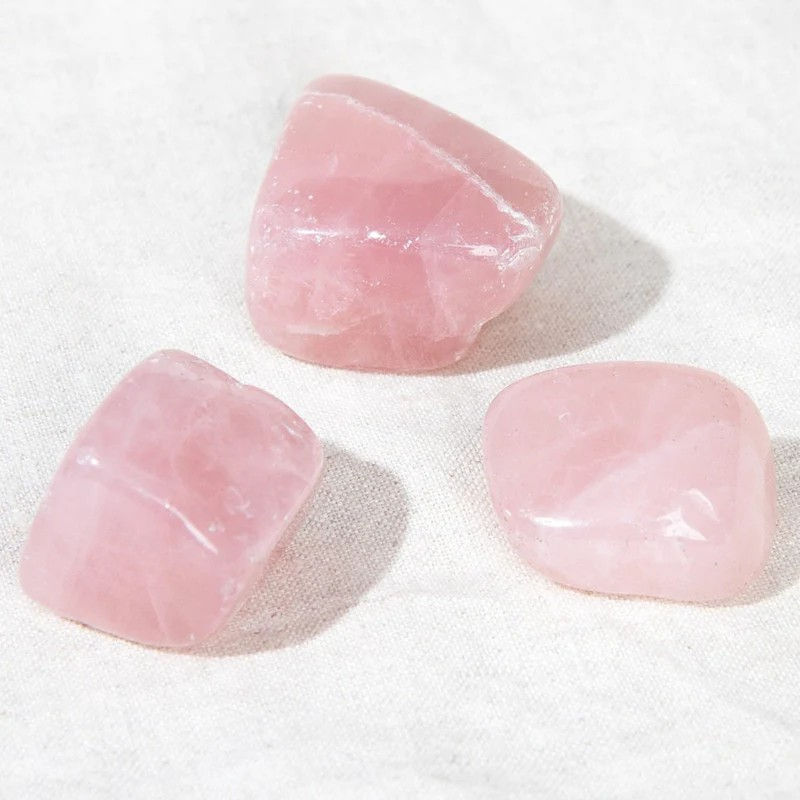
Rose Quartz
Often called the stone of unconditional love, rose quartz is associated with softness, emotional safety, and self-compassion. How to use: Keep it near your bed or hold it briefly during moments of self-reflection to encourage gentleness toward yourself.

Green Aventurine
Linked to balance, growth, and calm confidence, green aventurine supports emotional resilience and a steady, open heart. How to use: Place it on your desk or carry it with you to maintain emotional balance throughout the day.

Malachite
A more powerful heart stone, malachite is associated with emotional awareness and transformation, particularly when patterns are ready to shift rather than simply soothe. How to use: Use it during intentional pauses or journaling to bring awareness to emotional patterns and transitions.

Rhodonite
Connected to emotional repair and self-respect, rhodonite is often associated with grounding the heart after stress or disappointment. How to use: Hold it during grounding moments—especially after emotionally charged conversations—to restore steadiness.
You don’t need to activate, cleanse, or ritualize these stones. Their role here is simply as physical anchors—quiet reminders to return to balance, breath, and presence.
Bringing it all together: A One-Minute Heart-Centered Practice
This short practice can be done anywhere—seated, standing, or lying down.
Place one hand gently over the center of your chest.
If you’re working with a heart-centered crystal, you may hold it in the same hand as a physical reminder to stay present.
Inhale slowly through your nose for a count of four.
Exhale through your mouth for a count of six.
As you breathe, bring attention to the physical sensation beneath your hand—warmth, movement, or subtle expansion.
Silently repeat once or twice:
“I am steady. I am present. I am connected.”
After one minute, let your breath return to normal, set the crystal down if you’re using one, and move on with your day. This is not about creating emotion. It’s about allowing the nervous system to soften just enough to restore balance.
At Work Play Namaste,
we approach practices like this with the understanding that support doesn’t need to be complicated to be effective. Small, steady moments, like the one-minute pause above, are often the ones that create the most meaningful shifts.
If this resonated, you’re always welcome to explore more grounding practices, reflections, and resources — click here to join the WPN Wellness Club. We’re here to support you.
Crystal images shown for educational reference only. Images referenced from Tiny Rituals.
Click here to join the WPN Wellness Club
Sign up to receive member-exclusive offerings, special discounts, unique perks, and early access to what’s ahead at Work Play Namaste.

Comments